

Quick answer
Makhana (fox nut, Euryale ferox) is a popped water-lily seed. Plain popped makhana is mostly complex carbohydrate (about 75% by weight), with roughly 9–11 g of protein and under 1 g of fat per 100 g, according to Indian research. It is naturally gluten-free and plant-based. Roasted, flavoured makhana adds oil and seasoning, so its fat, calories and sodium are higher. Always read the pack's per-100 g table.
Makhana has gone from pooja thali and vrat food to the snack aisle. It is everywhere, and so are the claims about it. This guide sticks to what the numbers and published research actually say, including the parts most brands leave out.
What is makhana, exactly?
Makhana is the seed of Euryale ferox, the prickly water lily, grown in ponds and wetlands, mainly in the Mithila region of Bihar. The seeds are harvested, sun-dried, roasted and popped, the way popcorn pops, into the white, airy puffs you know as phool makhana. In 2022, "Mithila Makhana" received a Geographical Indication (GI) tag.
Makhana is not the same as lotus seed
This is the most common mistake online. Many articles quote USDA "lotus seed" nutrition data. That data is for Nelumbo nucifera, the sacred lotus, which is a different plant. Makhana is Euryale ferox. The numbers below come from studies of makhana itself.
Makhana nutrition per 100 g (plain, popped)
Published Indian studies report the following approximate composition for plain popped makhana. Values vary by variety, grade and processing.
| Nutrient (per 100 g) | Plain popped makhana (approx.) |
|---|---|
| Carbohydrates | ~75–77 g |
| Protein | ~9–11 g |
| Fat | under 1 g |
| Moisture | ~12–13 g |
| Energy (calculated) | ~340–350 kcal |
Energy is calculated from the carbohydrate, protein and fat values using standard conversion factors. A 2023 study in the Journal of Food Measurement and Characterization found that popping lowers protein slightly (to about 9 g/100 g in its samples) and makes the starch more digestible.
Research also reports that makhana contains minerals such as potassium, magnesium and phosphorus, along with polyphenols (plant compounds with antioxidant activity in lab tests).
For a deeper look at the nutrition profile, you can also explore Makhana Nutrition & Health Benefits.
Plain makhana vs roasted flavoured makhana: what changes?
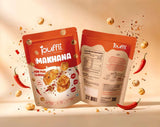
Once you roast makhana in oil and season it, the nutrition shifts. Here is an honest comparison using our own label (Puffli Peri Peri Classic) alongside plain makhana:
| Per 100 g | Plain popped makhana (research avg.) | Puffli Peri Peri Classic (pack label) |
|---|---|---|
| Energy | ~340–350 kcal | 480 kcal |
| Protein | ~9–11 g | 8 g |
| Carbohydrates | ~75–77 g | 66.3 g |
| Total fat | under 1 g | 20.7 g |
| Saturated fat | negligible | 9 g |
| Trans fat | 0 g | 0 g |
| Added sugar | 0 g | 1 g |
| Sodium | negligible | 570 mg |
What this means: the oil and seasoning are what make flavoured makhana crunchy and tasty, and they add fat, calories and sodium. That doesn't make it a bad snack. It makes it a snack, and portion matters. One 20 g Puffli pack gives about 96 kcal, 1.6 g protein, 4.1 g fat and 114 mg sodium.
What to look for on any flavoured makhana label: the type of oil (we use rice bran oil, never palm), fat and sodium per 100 g, added sugar and whether flavour enhancers are declared.
What are the nutritional benefits of makhana?
Stated plainly, without the hype:
1. It is naturally gluten-free and plant-based
Makhana is a seed, not a grain, so it contains no gluten. That makes plain makhana a useful snack base for people avoiding gluten and for vegetarian and vegan diets. For flavoured versions, check the seasoning and allergen statement.
2. It offers some plant protein
At roughly 9–11 g per 100 g (plain), makhana carries more protein than many puffed grain snacks. But a typical 20 g serving delivers only about 2 g. Makhana adds to your day's protein; it isn't a protein source on its own.
3. It is mostly complex carbohydrate, and very low in fat when plain
Plain makhana is almost fat-free, which is why it is popular as a base for home-roasted snacks. How much fat ends up in your bowl depends on how it is roasted.
4. It contains minerals and polyphenols
Studies report potassium, magnesium and phosphorus, plus polyphenols that show antioxidant activity in laboratory tests. Lab results don't automatically translate into health outcomes in people, so treat these as nutritional features, not medical benefits.
5. It is a satisfying crunch for small portions
Makhana is light and airy, so a small weight fills a bowl. For many people, that makes it easier to snack on a sensible portion than with denser fried snacks.
What makhana is NOT
- Not a weight-loss food. No single food causes weight loss. Total diet and activity matter.
- Not a treatment for any condition. If you manage diabetes, blood pressure or kidney health, ask your doctor or dietitian how snacks fit your plan.
- Not automatically low in salt or fat once flavoured. The seasoning and oil change the numbers, so read the label.
How much makhana can you eat in a day?
For most adults, one snack portion of 25–30 g of flavoured makhana (roughly one small pack) is a sensible amount, alongside balanced meals. Plain, home-roasted makhana with minimal oil can be eaten in slightly larger portions. If you are watching sodium, compare the sodium per 100 g across brands and flavours.
Who should be careful with makhana?
- People on sodium-restricted diets: choose plain or lightly salted options.
- People with nut allergies: makhana is not a nut, but many snack facilities also process nuts. Check the allergen statement. Puffli packs, for example, state "made in a facility that processes nuts."
- Young children: see our guide to roasted makhana for kids for age-appropriate serving tips.
How is Puffli makhana made?
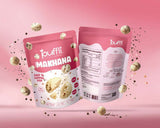
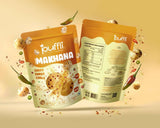
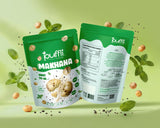
We source makhana from Madhubani, Bihar, and slow-roast it in rice bran oil, never palm oil, at our FSSAI-licensed partner facility in Udaipur. Our five flavours carry 8% plant-based protein, 0 g trans fat, 0 mg cholesterol and 1 g added sugar per 100 g. Every pack has a QR code linking to its batch details. Read the full journey from pond to packet in how phool makhana is made.
FAQ: makhana nutrition and benefits
How much protein is in makhana?
Plain popped makhana contains roughly 9–11 g of protein per 100 g, according to published Indian studies. A 20 g serving provides about 2 g.
How many calories are in 100 g of makhana?
Plain popped makhana is roughly 340–350 kcal per 100 g. Roasted, flavoured makhana is higher because of the added oil. Puffli Peri Peri Classic, for example, is 480 kcal per 100 g, or about 96 kcal per 20 g pack.
Is makhana gluten-free?
Yes. Makhana is a seed, so it is naturally gluten-free. For flavoured varieties, check the seasoning ingredients and allergen statement.
Is makhana the same as lotus seed?
No. Makhana comes from Euryale ferox (prickly water lily). Lotus seeds come from Nelumbo nucifera. They are different plants with different nutrition profiles.
Is roasted makhana better than fried snacks?
Roasted makhana is usually lower in fat than deep-fried snacks, but flavoured makhana still contains oil. Compare fat and sodium per 100 g on the labels.
Can I eat makhana every day?
For most people, a single snack portion a day fits a balanced diet. If you have a medical condition, check with your doctor or dietitian.
This article is for general information and is not medical advice. Consult a qualified doctor or registered dietitian for personal dietary guidance.
Try it the Puffli way:
five flavours, slow-roasted in rice bran oil. Shop all flavours. all the crunch. none of the drama.


