

Quick answer
Phool makhana is made in nine broad steps. The seeds of the prickly water lily (Euryale ferox) are gathered from pond beds, washed, sun-dried and graded by size. They are then roasted at high heat, tempered for two to three days, roasted again and cracked open so the kernel pops into a white puff. The puffs are sorted, then seasoned and packed. Most of India's makhana comes from Bihar, where the traditional process is still largely done by hand.
Makhana may look like a simple white puff when it reaches your snack bowl, but getting from pond to packet is anything but simple.
The journey begins in shallow ponds and wetlands, continues through drying, grading, roasting and popping, and eventually ends with the crunchy makhana we know as phool makhana.
So, how exactly is makhana made? Let's break down the traditional process step by step.
Where Does Makhana Come From?
Makhana grows in shallow ponds and wetlands, particularly across the Mithila region of North Bihar.
Districts such as Madhubani, Darbhanga, Purnia and Katihar are among the important makhana-producing areas. Bihar produces the large majority of India's makhana, with estimates commonly placing its share at around 80–90%.
In 2022, "Mithila Makhana" received a Geographical Indication (GI) tag, recognising the regional identity of this traditional agricultural product.
The Union Budget 2025–26 also announced a Makhana Board for Bihar with the aim of improving production, processing, value addition and marketing.
The plant itself, Euryale ferox, is a water lily with large floating leaves covered with sharp thorns. Its seeds mature inside spiky fruits and eventually sink to the bottom of the pond.
And that's where the makhana story really begins.
How Is Makhana Made? The 9-Step Process
Step 1: Harvesting from the pond bed
Harvesters traditionally enter the ponds and collect the seeds from the muddy pond floor, often using bamboo tools and nets. The work can involve wading or diving into the water and requires considerable physical effort.
Step 2: Washing and cleaning
Once collected, the seeds are washed repeatedly to remove mud, plant material and other debris. Any remaining fruit material is also separated from the seeds.
Step 3: Sun-drying
The cleaned seeds are spread out to dry until their moisture reaches a level suitable for popping. Moisture plays an important role in the popping process, as seeds that are too wet or too dry may not pop properly.
Step 4: Grading by size
The dried seeds are sorted according to size, traditionally using sieves. Larger seeds generally produce larger pops, which can command a higher price. This grading is one factor that contributes to differences in makhana quality and price.
Step 5: First roasting
The graded seeds are roasted in earthen or cast-iron pans at very high temperatures. ICAR has reported roasting temperatures in the range of approximately 250–320°C.
Step 6: Tempering
After the first roast, the seeds are rested for around two to three days. This tempering stage allows changes within the seed that help the kernel separate from the hard outer shell during the final popping stage.
Step 7: Second roasting and popping
The seeds are roasted again and then cracked open while still hot, traditionally by striking them with a wooden mallet. The hard shell breaks and the kernel expands into the white puff we recognise as phool makhana.
Timing matters here. The seed needs to be struck at the right moment after heating so that it produces a good-quality pop.
Step 8: Sorting and cleaning the pops
Once popped, the makhana is separated from shell fragments and other material. The puffs are then sorted based on factors such as size, colour and appearance.
Larger, whiter and more evenly shaped puffs are generally considered premium grades.
Step 9: Seasoning, roasting and packing
At this point, plain phool makhana can be sold as it is or further processed into a ready-to-eat snack. Snack brands may roast the popped makhana again with oil and seasoning to create flavoured makhana.
The finished snack is then packed with relevant product and batch information before it reaches consumers.
Why Is Traditional Makhana Popping So Hard on Workers?
The traditional popping process is physically demanding. Workers handling the final popping stage work close to extremely hot pans and need to crack the seeds while they are still hot.
ICAR has documented the intense heat exposure involved in traditional processing, including reports of workers experiencing heat-related discomfort and boils on their hands.
It is one of the lesser-known parts of the makhana story: the crunchy puff in your snack bowl can involve significant manual effort before it gets there.
How Are Machines Changing Makhana Processing?
Traditional processing is gradually being complemented by mechanised methods. The ICAR–Central Institute of Post-Harvest Engineering and Technology (CIPHET), Ludhiana, developed a mechanised roasting and popping system designed to reduce direct human contact during the hottest part of the process.
The system uses a closed, heated barrel, helping separate roasting and popping from direct manual handling.
Traditional vs mechanised processing
| Processing | Traditional method | ICAR-CIPHET mechanised method |
|---|---|---|
| Worker heat exposure | High, particularly during hand malleting at the pan | Reduced between roasting and popping |
| Processing time | Several days including tempering | About 20 hours for the roast-to-pop stage |
| Price realised | Baseline | Reported to be at least ₹50/kg more |
Mechanisation is still developing, but changes in processing technology, GI recognition and the Makhana Board initiative could contribute to safer working conditions, improved processing efficiency and more consistent quality over time.
What Makes Good-Quality Makhana?
Whether you're buying plain or flavoured makhana, a few basic quality indicators are worth looking for:
- Size and uniformity: Bigger, evenly sized pops can indicate a higher seed grade.
- Colour: Good-quality pops are generally creamy white without obvious dark or burnt patches.
- Crunch: Fresh makhana should have a crisp texture. Stale makhana can lose its crunch and become chewy.
- Pack information: Look for clear ingredient information, FSSAI licence details, pack date and best-before information.
How Puffli Makes Its Makhana
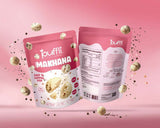
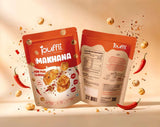
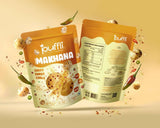
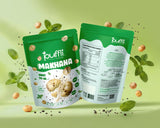
We source our Puffli Makhana from Madhubani, Bihar.
We then slow-roast it in rice bran oil, never palm oil, and season it at our FSSAI-licensed partner facility in Udaipur, Rajasthan.
Every Puffli pack also carries a QR code. Scan it and our trace page shows the batch, manufacturer and manufacturing date for that exact pack.
Because we think you should be able to see where your snack came from without having to ask.
FAQ: How Is Makhana Made?
What is phool makhana made from?
Phool makhana is the popped seed of Euryale ferox, the prickly water lily commonly associated with fox nuts. The plant grows in ponds and wetlands, particularly in Bihar.
How long does it take to process makhana?
The traditional process takes several days because it includes drying, grading, roasting, two to three days of tempering, followed by another roasting and popping stage. Mechanised systems can reduce the roast-to-pop stage considerably.
Why is makhana expensive?
Makhana processing is labour-intensive, particularly during harvesting and traditional popping. In addition, only part of the original seed weight becomes popped makhana, while larger premium grades can command higher prices.
Which state produces the most makhana?
Bihar is the leading makhana-producing state in India. Estimates commonly put Bihar's share at around 80–90% of India's makhana production. "Mithila Makhana" received a GI tag in 2022.
Is makhana fried or roasted?
Phool makhana is produced by roasting and popping the seeds. Flavoured snack makhana may then be roasted again with oil and seasoning. The specific preparation varies by product, so check the ingredient list for details.
Where is Puffli makhana sourced from?
Puffli makhana is sourced from Madhubani, Bihar, and slow-roasted in rice bran oil at our partner facility in Udaipur, Rajasthan. Every pack also carries a QR code that can be used to view batch details.
Taste the end of the journey.
Five flavours. Slow-roasted. Never rushed. All the crunch, none of the drama.
Shop Puffli


